Showing posts with label Big 8. Show all posts

Wednesday, June 27, 2012

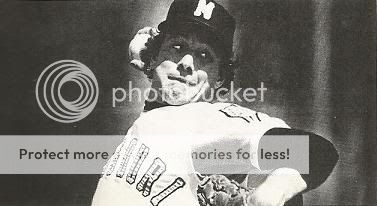
Mizzou Baseball 1979: Big 8 Champions

Coach Gene McArtor

Tom Heckman
Phil Bradley
MU Pitcher Ron Mathis

MU Pitcher Steve Southerland
Photos from Savitar and from MU Baseball Media Guides

4 Days

Wednesday, May 16, 2012

A Tip of the Cap to Kansas Baseball

From the Missouri State University Independent, a Mizzou student-run newspaper, February 8, 1886:

On the 30th of January last there was a meeting of quite a number of baseball enthusiasts held in the Engineering building for the purpose of considering what plans should be laid for the coming baseball season.

This year the chances are very favorable for establishing baseball on a firm basis, and this could once be accomplished those that are in position to know, say, that baseball would then be entirely self-sustaining.

We must have a team placed in the field early this year and one that is able to meet all comers. Challenges from Michigan University, Rush Medical College of Chicago, and from a college in Illinois have already been received, and now that we have an athletic field we probably could get Kansas to attempt to retrieve her shattered fortunes in a contest on the diamond.


The Border War. The Border Showdown. The Border Hoe-Down.

Whatever they're calling it these days.

The MU-KU rivalry ranks right up there with the other great sports rivalries. UND-Duke. Michigan-Ohio State. Yankees-Red Sox. Cards-Cubs. Kewpies-Jays. (I threw that last one in for Larry.)

As shown by that quote above from 126 years past, the rivalry between Missouri (known then as Missouri State University) and Kansas was already well established.

But apparently that rivalry is as dead as jayhawk road-kill.

The annual MU-KU baseball game at Kauffman Stadium was called off this year, presumably because KU's administration (pushed by basketball coach Bill Self), is miffed at the Tigers for leaving the Big 12.  I can't imagine that KU Baseball Coach Ritch Price really wanted to give up a neutral-site series that his team has dominated.

MU has played KU in more baseball games than any other team, compiling a record of 196-131-2.  Kansas was an original member of the Big 6, along with Missouri.

The first game in the official records between Missouri and Kansas was in in 1901, with the Tigers coming out the winners, 6-3.

According to my research, MU and KU met on the diamond earlier than that, as far back as 1899.  A couple of excerpts from the Columbia Missouri Herald that Spring:
May 5, 1899: The base ball team is retrieving Missouri's athletic reputation. In their first game, the one with Nebraska, they beat by a score of 8 to 5. They lost to St. Marys 16 to 11. In the third game they defeated Kansas by a score of 9 to 8. Their last game, the return game with Kemper at Boonville, they won 24 to 6. Curtwright, the new pitcher, is an unusually strong man in the box. He showed up well at all times and but few hits were made off his balls. Hawkins showed that he was a master hand at batting and knocked a home run with the first ball the crack Kansas pitcher threw him. Saturday night when the news of the victory over Kansas was received the boys made merry with a parade (robe de nuit). They went to the two colleges and cake walked and danced just to celebrate and for the benefit of anyone who might wish to see them.
. . .
May 26, 1899: The Missouri-Kansas base ball game Monday evening was one of the best base ball games ever seen here. A good crowd was out and the men of both sides in fine condition. The play was rapid and excellent, Missouri making only 4 errors, Kansas 7. This game gives Missouri the intercollegiate championship between the colleges of Missouri, Kansas, and Nebraska. The M.S.U. boys have lost only two games this season and have reason to be proud of themselves.
MU-KU Baseball has spawned its own stories and legends and villains.  I've asked other long-standing Mizzou Baseball fans what they remember most about the MU-KU rivalry.  Their answers included:

That last one stands out in the memory of many MU Baseball fans.

Who could forget the battle between MU and KU at the Big 12 Tournament in 2006.  The Tigers lost that game, which allowed the Jayhawks to move on to the championship game.

But the game stands out not for who won or lost the game, but for the brawl that took place at third base between Mizzou's Brock Bond and KU's Ryne Price (one of three of Head Coatch Ritch Price's boys).

Jayhawks fight way into finale (Lawrence Journal World, 5/26/2006)
In a road rendition of the Border Showdown, bad blood spilled in the second inning when KU's Ryne Price, rounding the bases during a home-run trot, dipped a shoulder into Missouri third baseman Brock Bond.

The two players locked up and soon were on the ground scuffling. Players from both schools immediately scurried to the scene from positions, the dugouts and the outfield bullpens. Fists were flying in some confrontations.

Several players had to be restrained by teammates as the two sides faced off near the Kansas dugout.

The umpires and coaches eventually cleared the field, and the two head coaches met with the umpires to discuss ejections, which were handed out to Bond and Price, the sophomore son of Jayhawks coach Ritch Price.
Another game sticks in my memory for a more personal reason.  It was the game that taught my son an important lesson.

On March 24, 1998, senior pitcher Jay Bell took the mound against the Jayhawks in a mid-week game and pitched one of the quickest, most dominating shutouts I've ever seen. (Read the Columbia Daily Tribune's account of the game)

After the game fans were laughing and trading high fives. And the father of one of Bell's team-mates told his son to go invite the pitcher to go with them to dinner, because he had just earned "the biggest, best steak he ever had".

My son, who was about 12 at the time, asked me, "What's the big deal? I thought you said this one doesn't even count in the conference."

And so I had the traditional father-son "facts of life" conversation - the facts about the evil birds from Lawrence and the necessity of always affirming the eternal truth that "KU Sucks".

And he has never forgotten the lesson he learned that day.

Oh, and one last thing.  This salute to KU Baseball would not be complete without yet another airing of  the most memorable KU video ever:


Here's a Tip of the Cap to the Kansas Jayhawks and Big 8 Baseball. May we meet again. Diamonds are forever.

Thursday, April 19, 2012

A Tip of the Cap to Kansas State Baseball

When I think of Mizzou vs. Kansas State, I think of the Tigers' LHP Rick Zagone.

Rick Zagone vs. the Wildcats
In 2007, the Tigers traveled to Manhattan, KS, in the middle of what some would say was Mizzou's best season under Tim Jamieson, a season that would climax with the Tigers hosting a Regional in Columbia.

That great Tiger team was smacked around 12-0 by the Wildcats on a frigid Friday night in the first game of the series.  MU's ace, Aaron Crow, gave up 5 runs in 5.1 innings and things went downhill fast from there.

The following day I almost feared to turn on the radio to listen to the Tigers' second game in Manhattan.  But I did tune in Tex Little and J.C. Field as I was out and about running errands that Saturday afternoon.  And by the 6th inning I let my wife go on into the mall while I stayed in the car, listening to Tex describe Rick Zagone's success at carving up the K-State hitters.
Zagone came within two outs of a no-hitter in a dominant, one-hit shutout that Missouri won 3-0. The sophomore lefthander walked four and recorded a career-high 11 strikeouts to keep his season record perfect at 6-0 in what coach Tim Jamieson called a “tremendous” performance.
. . .
“After yesterday, I wanted to show our guys that I would keep the number of runs down and make it easier of them,” Zagone said. “There were a few tough situations, but I just tried to stick with the game plan.” (Columbia Missourian, 4/8/07)
Zagone was named the Big 12 Pitcher of the Week and the NCBWA National Pitcher of the Week for his performance.

It was one of many Tiger victories over the Wildcats during the past 100+ years.  MU holds a 165-113-1 record against KSU.

Missouri first played Kansas State Agricultural College (as it was originally known) in 1907, losing 5-2.

Kansas State joined what was then the Missouri Valley Conference in 1913 and became a part of the newly formed Big 6 in 1928, along with Missouri.  According to their record books, the only conference championships the Wildcats have ever won were in 1907, 1928, 1930 and 1933.  They are 3-6 (.333) all-time in NCAA Regionals, all those appearances in the past three years.

During the 19 year stretch from 1948 through 1966 Missouri absolutely dominated Kansas State.  MU's record vs. KSU was 41-8, a .837 winning percentage, winning those games by a cumulative 348-161 score.

Toward the end of that era, Kansas State was the victim of one of MU's no-hitters, being shut down by Dennis Musgraves on April 25, 1964.

It wasn't until 2003, though, that things began to look up for the Wildcats.   That was the year they hired Brad Hill, who had been highly successful at Central Missouri State.  He has steadily built the program up, culminating in 3 straight NCAA Regional appearances in the past three years.  Missouri, though, has still had the best of Kansas State during those three years, with a 6-2 record.

It's kind of nice, though, to see the perpetual Mildcats getting more wild and crazy.

Robert J Lipscomb
One of the most entertaining things I ever saw at a K-State-Mizzou game was the time a few years ago that Robert J. Lipscomb, known as Kansas State's #1 fan made the trip to Columbia for a series.  The loud and enthusiastic fan had made several trips to Columbia for football games, but this was the first time I had seen him at Simmons Field.  While some fans in the stands looked at him like he was a nuisance, I just smiled.  Every baseball team needs at least one maniacal fan who doesn't care what people think of his enthusiasm.

Here's a Tip of the Cap to the Kansas State Wildcats and Big 8 Baseball. May we meet again. Diamonds are forever.

Thursday, April 12, 2012

A Tip of the Cap to Oklahoma Sooners Baseball

It was April of 1995 when the Antlers showed up for a Mizzou Baseball game.

The Oklahoma Sooners were in town, including their first baseman, Ryan Minor, who had caught the attention of the Antlers when he played against MU in basketball.  It was a rowdy night at the ballpark as Mizzou's designated hecklers entertained the crowd.

The records show Missouri lost, shut out 8-0, but it stands out as a representative rowdy game out of many battles between MU and our old Big 8 rival, the Sooners.

I also vividly recall a Saturday double-header against Oklahoma at pre-Taylor-Stadium Simmons Field.  The game had been rained out or snowed out or just plain frozen out the night before, so a few crazy fans showed up for a Saturday twin-bill in the cold and wind, with occasional spitting rain and snow flurries.  I recall taking a tarp to the game with me and constructing a makeshift tent on the top row, up against the old press box.  I left a hole just large enough to watch the game through, and soldiered on through all of game one and about half of game two before I finally gave up and went home.

Missouri Baseball first played the Sooners of Oklahoma in 1912, losing 2-1.

Oklahoma joined the original Missouri Valley Conference in 1920, and stayed with the new Big 6 Conference that was formed in 1928.

1938 was the year for a remarkable game between the Tigers and Sooners, one that almost resulted in a no-hitter for legendary Tiger pitcher Carl Miles, and featured one young man's grandfather at a key moment.

From the 1920s through the '50s, the Sooners were perennial contenders in the conference, winning the conference championship 16 times in a 29-year span.  That era, led by coach Lawrence Haskell and then Jack Baer, also saw their first National Championship, in 1951.  That year the Tigers lost to the Sooners in a 5-4 contest.  That was the year before John "Hi" Simmons' '52-'65 Tiger dynasty began to dominate the conference and make repeated appearances in the CWS.

In the '70s Head Coach Enos Semore led OU to another string of conference championships (6 out of 7 straight years).  In the 80s the Sooners were still a great team, but consistently came in 2nd place to the powerhouse Oklahoma Sate teams of Gary Ward, while the Tigers consistently came in 3rd or 4th.

The Sooners won the National Championship again in 1994 under Larry Cochell.  On the way to that improbable CWS win, OU swept Missouri in no less than 6 games, including a 15-2 bludgeoning in the Big 8 Tournament.

Larry Cochell was always appreciated by MU fans, since his presence meant Tim Jamieson was not the shortest person on the field.

When Larry Cochell was abruptly removed from his position in 2005, many so-called experts considered Tim Jamieson to be Sooners' Athletic Director Joe Castiglione's first choice for the job.  Castiglione had originally hired Jamieson when he was AD at MU.  But that was not in the cards.

Instead, Joe C. unwittingly kicked off a screwball comedy when he announced the hire of Wichita State coach Gene Stephenson (an MU alum, although not much loved by MU Baseball fans), who then backed out and tearfully returned to his Shockers.  Castiglione then hired OU assistant coach Sunny Golloway to replace Cochell, a choice that has turned out to be pretty good for the Sooners.

♦ I witnessed one of the best plays I've ever seen at Simmons Field in early April, 2009, in a game against Oklahoma.
For all the miscues that put the Tigers in a hole, center fielder Ryan Lollis produced a highlight-reel play.

In the top of the ninth with a runner on second, Oklahoma first baseman Aaron Baker smashed a Gibson pitch high into the Columbia sky.

Lollis ran to the warning track and leapt into the air, while extending arm over the outfield wall, to snag the ball as it went over the fence. The play would rob Baker of a home run and kept two runs off the scoreboard.

Lollis then threw the ball to second base to get the double-play and was mobbed at third by teammates.

"I was on cloud 10," Lollis said. (Columbia Missourian, 4/3/2009)
And speaking of that highlight-reel:


Conference realignment will force a road more traveled for baseball (NewsOK.com, 5/29/2010)
"Don't think I haven't thought about it," admitted Oklahoma coach Sunny Golloway. "When I first heard about it, the possibility of Nebraska and Missouri leaving, I started thinking, who could potentially be. ... right then, I stopped. I'm the baseball coach. We understand, we're a baseball program within the athletic department. We're proud of football. It's the program that drives (the athletic department). It's the engine. We understand that.

"My bosses, Joe (Castiglione), President (David) Boren, they're going to tell us who we're going to go play. What needs to be done in the best interest for our university will be done. I just hope it works out for the best for all of our sports, including baseball."

Here's a Tip of the Cap to the Oklahoma Sooners and Big 8 Baseball. May we meet again.  Diamonds are forever.

Thursday, March 22, 2012

A Tip of the Cap to Oklahoma State Baseball

Robin Ventura
The first game I ever attended at Simmons Field was on a Friday night, April 14, 1988.  The Tigers were facing Oklahoma State.   The Cowboys' head coach, Gary Ward, faced off against Mizzou's Gene McArtor.   The Tigers, led by shortstop, Dave Silvestri, lost that game 13-3, in no small part due to the offensive and defensive skills of the OSU third baseman, Robin Ventura.  I like to froze my butt off that night, as many people do their first time out to an MU ballgame at Simmons Field, where the temperature is always 10 degrees cooler inside the stadium than out in the parking lot.

Gary Ward left OSU shortly after I began following MU Baseball in earnest, and therefore most of my memories of the Cowboys feature the mercurial Tom Holliday.  He was always the most fun college baseball coach to heckle, if only because he despised hecklers so very much:  "They can rag on me all they want. If they think it's OK to rag on 20-year-old kids, that shows very small character."

Current OSU skipper Frank Anderson is much more boring than either Ward or Holliday, distinguished only by his penchant for frequent slow walks onto the field to argue with the umpires.

Oklahoma State was a late-comer to the Big 8.  After a brief stint (1925-28) in the original Missouri Valley that became the Big 6, Oklahoma A&M, as it was then known, joined the Big 7 in 1958, making the conference the Big 8.

The Missouri-Oklahoma State baseball rivalry has always been a hard-fought one.  No matter which team is up or down in any particular season, the MU-OSU series is always a good one.

In Missouri's College World Series Championship season of 1954, the Tigers made an early season swing south to Arkansas and then over to Stillwater, OK, to play a 2-game series with the Cowboys.  In the first game, the "Cowpokes" handed the Tigers one of their few losses of the season, 5-3.  The following day the Tigers returned the favor, beating the Cowboys 12-6, in spite of setting a Mizzou record of 8 errors that still stands today.

That second game against the Cowboys in '54 featured the first mound appearance of a young basketball player turned pitcher by the name of Norm Stewart.  In Norm's own words, he "was a flop".  "He walked four batters and committed two of those record errors himself.  The following is from Stewart's biography, Stormin' Back:
When I got back to Columbia, I told Coach Simmons, “I’m going to quit baseball. I don’t think I can help the team any.”

“Well, let’s do this,” he said. “Your performance against A&M was the worst I had ever seen. You were horrible. But we’re going to play Fort Leonard Wood soon. I’m going to start you. If you don’t do any better than your last outing, you won’t have to turn in your gear. I’ll pick it up for you.”
Stewart went on to a successful year and career as a pitcher (and basketball player) at Mizzou, including throwing a no-hitter in 1956.  Against Arkansas.

The longest game Mizzou ever played was a 16-inning marathon against OSU on May 8, 1971.

I never got see the Cowboys' most famous record-breaking player, Pete Incaviglia.  The records show that in one 4-game series between OSU and MU in 1985, Incaviglia went 5-for-13, hitting 9 RBIs and 3 home runs - one of them a grand slam.

I was on hand for the wild game in April of 1996 at Simmons Field that finished with Mizzou defeating the Cowboys 24-23, part of a 3-game sweep of OSU, something the Tigers had not accomplished since 1971.

Gary Ward, the Cowboys' coach, was colorful as always after the final loss of that series:  "I'm not into alibis or excuses,'' Ward said. ``You get your ass kicked, you lick the blood off your lips and pack your bags, get on the bus and go play the next one."

1996 was the final year of the Big 8, and Missouri tied Oklahoma State for the regular season championship, claiming the #1 spot due to having won the head-to-head contests during the regular season.  The championship was extra sweet, having finished dead last in the conference the year before.

OSU had the last laugh, though, beating the Tigers in the championship game of the final Big 8 Tournament.

Cowboy Baseball Hall of Fame: Gary Ward (okstate.com)
Gary Ward was Oklahoma State's head baseball coach from 1978 through 1996 and guided the Cowboys to an unprecedented 16 straight conference titles, 17 NCAA regional appearances and 10 trips to the College World Series. Seven of OSU's World Series appearances (1981-87) were in consecutive years, an NCAA record. The Cowboys also appeared in the NCAA championship game three times under Ward.

He compiled a record of 953-313-1 in 19 seasons in Stillwater, before retiring prior to the 1997 campaign. Ward came out of retirement and was the head coach for two seasons at his alma mater New Mexico State in 2001 and 2002, leading the Aggies to the Sun Belt Tournament championship and an NCAA appearance in 2002. Ward's career record of 1,022-361-1 (.739) is 13th best all-time in win percentage and 24th in the NCAA record books in wins.

Gary Ward helped Oklahoma State recapture its role among the most respected and well-known programs in the nation.

108 of his players at OSU went on to sign professional contracts and nine were named first team All-America, while countless others received second and third team plaudits during his coaching tenure.

Here's a Tip of the Cap to the Oklahoma State Cowboys and Big 8 Baseball.  May we meet again.  Diamonds are forever.